
7 Essential Wedding Photography Hints for Stunning Photos in 2025
Wedding photography is about more than just a single person behind a lens; it's a collaborative art form. Whether you're the engaged couple, a professional photographer, a detail-oriented planner, or a supportive guest, understanding a few key strategies can transform a wedding album from good to breathtaking. This comprehensive guide provides actionable wedding photography hints for everyone involved, covering everything from professional techniques to seamlessly collecting every candid moment. The goal is to ensure no memory is left behind, creating a complete and vivid story of the celebration from multiple perspectives.
We'll explore how to master lighting and posing, create flawless timelines, and, most importantly, how to effortlessly consolidate every photo from your special day. A key part of this is leveraging modern tools that make gathering guest photos incredibly easy and instant. For instance, using a dedicated QR code platform allows guests to upload their pictures directly to a shared gallery with a simple scan—no app download is required. Display your event’s QR code at the venue entrance or on invitations for instant photo uploads. This seamless approach complements professional shots by capturing candid moments that might otherwise be missed, making it perfect not just for weddings but also versatile enough for birthdays, corporate gatherings, reunions, and more.
1. For Couples: Crowdsource Your Candids with QR Code Simplicity
While your professional photographer masterfully captures the iconic moments, some of the most cherished memories happen in between the big events. Your guests, with their unique perspectives, will capture countless candid smiles, spontaneous dance-offs, and heartfelt interactions. The main challenge has always been gathering these scattered digital treasures. Modern platforms offer a refreshingly simple solution: a dedicated QR code for your event that allows for instant, seamless photo consolidation.
This approach bypasses the hassle of chasing down guests, navigating clunky social media hashtags, or asking everyone to download a new app. Guests simply scan a QR code with their phone's camera, which instantly opens a private, direct-upload link. From there, they can add photos and videos in real-time to a single, organized gallery. It’s an elegant, incredibly easy, and effective method to consolidate every precious moment without any friction.
How to Implement This Seamlessly
To maximize participation, make the QR code visible and accessible. For couples envisioning this seamless photo collection, understanding the practicalities of creating QR codes effectively can be a valuable resource. Consider these placement ideas:
- On Welcome Signs: Place a large, scannable QR code at the entrance to the ceremony or reception.
- On Reception Tables: Print small, elegant cards with the QR code and place them next to centerpieces or on each place setting.
- In Your Program: Include the code directly in your wedding program so guests can scan it while they wait.
Actionable Tips for Success
To get the most out of this modern wedding photography hint, follow these tips:
- Announce It: Have your DJ or MC make a quick, friendly announcement during the reception welcome, encouraging guests to scan and share.
- Pre-Wedding Events: Use the same QR code for your bridal shower, rehearsal dinner, and other pre-wedding celebrations to capture the entire journey.
- Share with Everyone: After the wedding, share the gallery link with loved ones who couldn't attend, allowing them to experience the day through everyone's eyes.
Platforms like WedPicsQR are designed specifically for this purpose, offering customizable galleries that match your wedding theme. While the primary focus is on weddings, this technology is also incredibly versatile and perfect for other events like birthdays, corporate gatherings, and family reunions. Learn more about how you can effortlessly collect every photo from your big day on WedPicsQR.com.
2. For Photographers: Strategic Pre-Wedding Planning and Shot Lists
A truly exceptional wedding gallery is born long before the first photo is taken. Strategic pre-wedding planning, centered around a detailed shot list and timeline, is the bedrock of comprehensive coverage. This process transforms a chaotic, fast-paced day into a structured, manageable shoot, ensuring no cherished moment is left to chance. It involves deep collaboration between the photographer, the couple, and key vendors to map out the entire day, from the first makeup application to the final farewell.
This meticulous preparation reduces on-the-day stress and allows for creative freedom. By establishing a clear plan for logistics, key moments, and desired poses, photographers can focus on artistry rather than decision-making. Pre-planning a detailed 12-hour timeline, scouting locations for lighting challenges, and coordinating with the venue staff are all crucial components of this systematic approach, championed by industry leaders like Elizabeth Messina for its thoroughness.
How to Implement This Seamlessly
Effective planning begins with the initial client consultation. Use this meeting to understand the couple's vision, identify their "must-have" shots, and outline the day's flow. A venue walk-through is also essential, ideally at the same time of day as the wedding, to assess lighting conditions and pinpoint ideal shooting locations.
- Create a Master Timeline: Develop a shared document that outlines every segment of the day, from getting ready to the reception exit, including travel and buffer times.
- Categorize Your Shot List: Organize the shot list into three tiers: must-haves (like the first kiss), important (like specific family groupings), and nice-to-haves (like artistic details).
- Coordinate with Vendors: Share the timeline with the wedding planner, DJ, and venue coordinator to ensure everyone is synchronized, especially for key events like the cake cutting or first dance.
Actionable Tips for Success
To elevate this wedding photography hint from a simple list to a powerful tool, integrate these professional practices:
- Build in Buffer Time: Unforeseen delays are inevitable. Add 15-20 minutes of buffer time around major transitions, such as travel between the ceremony and reception.
- Assign Clear Roles: If working with a second shooter, assign them specific responsibilities, like capturing guest reactions while you focus on the couple.
- Use Digital Planning Tools: Leverage apps or software designed for wedding photography planning to keep timelines, shot lists, and contact information organized and accessible.
This methodical planning ensures every critical moment is captured beautifully. For a deeper dive into organizing your shoot, you can explore detailed guides on creating the ultimate wedding photography checklists for a flawless day.
3. Posing Techniques for Flattering Couple and Group Portraits
While candid shots capture authentic emotion, posed portraits create the timeless, frame-worthy images that couples treasure for a lifetime. Strategic posing is an art that goes beyond simply telling people where to stand. It involves a deep understanding of body angles, weight distribution, hand placement, and emotional direction to craft portraits that feel both natural and beautifully composed, highlighting the couple’s connection and individual features.
Effective posing turns a good photo into a great one. By guiding subjects into flattering positions, a photographer can create a sense of intimacy and elegance, ensuring everyone looks their absolute best. This is one of the most valuable wedding photography hints for professionals and a useful area for couples to understand, as it helps them feel more comfortable and confident in front of the camera.

How to Implement This Seamlessly
A great pose should never feel stiff or forced. The goal is to provide gentle direction that leads to a relaxed and genuine moment. For photographers, mastering posing means building a toolkit of go-to positions and prompts.
- For Couples: Start with dynamic movement. Ask the couple to walk toward the camera holding hands and looking at each other. This creates natural interaction and soft, flowing lines.
- For Groups: Use staggered heights and angled body positions to create visual interest and avoid a static, lineup-style photo. Position people in layers rather than a flat row.
- Classic Poses: A timeless example is angling the bride's back slightly toward the camera while the groom faces it at a 45-degree angle, creating an intimate and flattering composition.
Actionable Tips for Success
To get the most out of your portrait sessions, focus on the small details that make a big impact.
- Shift the Weight: Instruct subjects to shift their weight onto their back foot. This simple adjustment creates a more relaxed posture and a flattering S-curve in the body.
- Give Clear, Positive Direction: Use encouraging language like, "Bring your hands together gently," or "Relax your shoulders," instead of "Don't do that."
- Prompt, Don't Pose: Instead of just placing people, give them an action or a thought. Asking a couple to whisper a secret or remember their first date can evoke authentic smiles and expressions.
Mastering these techniques is crucial for creating stunning images. For more in-depth guidance on arranging your wedding party, you can explore detailed strategies for effortless and elegant wedding party group photos.
4. For Photographers: Master Advanced Lighting with Flashes and Modifiers
While natural light is beautiful, it’s not always available or ideal. Mastering artificial lighting with flashes and modifiers is a game-changing skill for wedding photographers. This technique involves using off-camera flashes, softboxes, umbrellas, and diffusers to sculpt and control light, ensuring stunning, professional-quality images regardless of the environment. It transforms challenging scenarios, like dark reception halls or harsh midday sun, into opportunities for creative, dramatic, and flattering portraits.
Strategic use of artificial light allows you to overpower undesirable ambient light, create a beautiful soft glow for portraits, or add a dynamic backlight that separates the couple from their background. For example, an off-camera flash with a softbox can illuminate the couple's first dance with soft, romantic light, while a subtle fill flash can eliminate harsh shadows during an outdoor ceremony. This control is a key differentiator between amateur and professional wedding photography.
How to Implement This Seamlessly
To integrate advanced lighting without disrupting the wedding's flow, preparation is key. Renowned educators like those at KelbyOne and pioneers like David Hobby of Strobist have long championed these techniques. Consider these fundamental approaches:
- For Portraits: Place an off-camera flash on a light stand at a 45-degree angle to the couple. Attach a softbox or shoot-through umbrella to diffuse the light, creating a soft, flattering effect.
- For Receptions: Position one or two flashes in the corners of the dance floor to create dynamic rim lighting or backlighting, capturing the energy of the celebration.
- For Harsh Sun: Use a flash with high-speed sync (HSS) to add a gentle fill light, softening shadows on faces while maintaining a wide aperture for a blurred background.
Actionable Tips for Success
To elevate your images with one of the most impactful wedding photography hints, focus on both your gear and your technique:
- Invest in Quality Gear: Reliable wireless triggers (like those from Godox or Cactus) and versatile modifiers are essential. You don't need the most expensive gear, but reliability is crucial.
- Practice Beforehand: Test your setups before the wedding day. Understand how to quickly adjust power settings and positions to match changing ambient light conditions.
- Always Bring Backups: Carry extra batteries, spare flashes, and a backup trigger. A gear failure at a critical moment is not an option.
5. For Photographers: Efficient Workflow and File Management Systems
For a professional wedding photographer, the work doesn't end when the last guest leaves the dance floor. An efficient post-production workflow and robust file management system are the invisible pillars supporting a successful business. Establishing a systematic process, from the moment you press the shutter to final gallery delivery, is crucial for data safety, consistency, and a professional client experience that builds trust and referrals.
This disciplined approach ensures that thousands of precious memories are protected against data loss and processed with precision. By standardizing camera settings, implementing on-location backup strategies, and using a logical file naming convention, you can transform a potentially chaotic process into a streamlined and predictable operation. This system not only saves hours of editing time but also guarantees that every image receives the same high-quality attention.
How to Implement This Systematically
A reliable workflow begins in-camera and extends through archiving. For photographers seeking to master this crucial skill, educators like Jared Platt offer comprehensive training on building efficient Lightroom systems. Consider these foundational steps:
- In-Camera Redundancy: Use a camera with dual card slots and set it to record RAW files to both cards simultaneously. This creates an instant, real-time backup.
- On-Site Backup: During breaks or at the end of the night, back up all memory cards to a portable SSD like the Samsung T7. This secures the images before you even leave the venue.
- Organized Ingesting: Upon returning to your office, use a consistent folder structure (e.g., YYYY-MM-DD_CoupleNames) and a file naming convention (e.g., EventDate_Photographer_Sequence) to organize images systematically.
Actionable Tips for Success
To refine your process into a well-oiled machine, integrate these professional wedding photography hints into your routine:
- Follow the 3-2-1 Rule: Always maintain 3 copies of your files, on 2 different types of media, with at least 1 copy stored off-site (e.g., a cloud service like Backblaze or a physical drive at another location).
- Develop Custom Presets: Create and refine your own Lightroom presets that match your signature editing style. Applying these during import allows you to batch-process hundreds of images at once, drastically reducing culling and editing time.
- Back Up Your Catalogs: Your Lightroom catalogs and presets are valuable assets. Regularly back them up to cloud storage so your editing environment can be restored on any machine.
6. For Photographers: Master Client Communication and Expectation Management
Beyond technical skill and artistic vision, the foundation of a successful wedding photography business is built on trust and clear communication. Managing client expectations from the initial consultation through the final gallery delivery is paramount. This process prevents misunderstandings, minimizes revision requests, and ensures a seamless experience that turns happy clients into enthusiastic advocates for your brand.
A well-defined communication strategy demonstrates professionalism and gives couples confidence in their investment. It involves setting clear timelines for deliverables, establishing style alignment before the big day, and providing consistent updates. When clients know exactly what to expect and when, they can relax and enjoy their wedding, knowing their precious memories are in capable hands. This proactive approach is one of the most critical wedding photography hints for building a sustainable career.
How to Implement This Seamlessly
Effective communication starts long before the wedding day. Business educators like Jasmine Star have popularized systems that build rapport and clarify every step. The goal is to create a transparent, predictable, and supportive client journey.
- Initial Consultation: Schedule a dedicated 30-60 minute meeting to discuss the couple's vision, priorities, and "must-have" shots. Use this time to understand their personalities and what they value most.
- Style Alignment: Create shared mood boards on platforms like Pinterest to visually align on editing style, posing, and overall aesthetic. This ensures your artistic approach matches their dream.
- The Contract: Your contract is your most important communication tool. It should explicitly detail deliverables (number of photos, hours of coverage), a firm delivery timeline (e.g., 30-60 days), and your revision policy (e.g., two rounds of minor edits).
Actionable Tips for Success
To elevate your client experience and build a stellar reputation, integrate these communication practices:
- Send Sneak Peeks: Deliver a small gallery of 5-10 "wow" images within 48 hours of the wedding. This builds immense excitement and gives the couple something to share immediately.
- Use a Client Portal: Platforms like Pixieset, ShootProof, or Zenfolio create a professional, centralized hub for contracts, invoices, and final gallery delivery.
- Set Boundaries: Clearly state your business hours and expected response times (e.g., within 24-48 business hours) to manage expectations and maintain a healthy work-life balance.
- Schedule a Final Delivery Meeting: When the full gallery is ready, consider a brief call or meeting to walk them through the images, discuss album options, and ensure they are thrilled with the results.
7. Essential Gear Investment and Backup Strategy
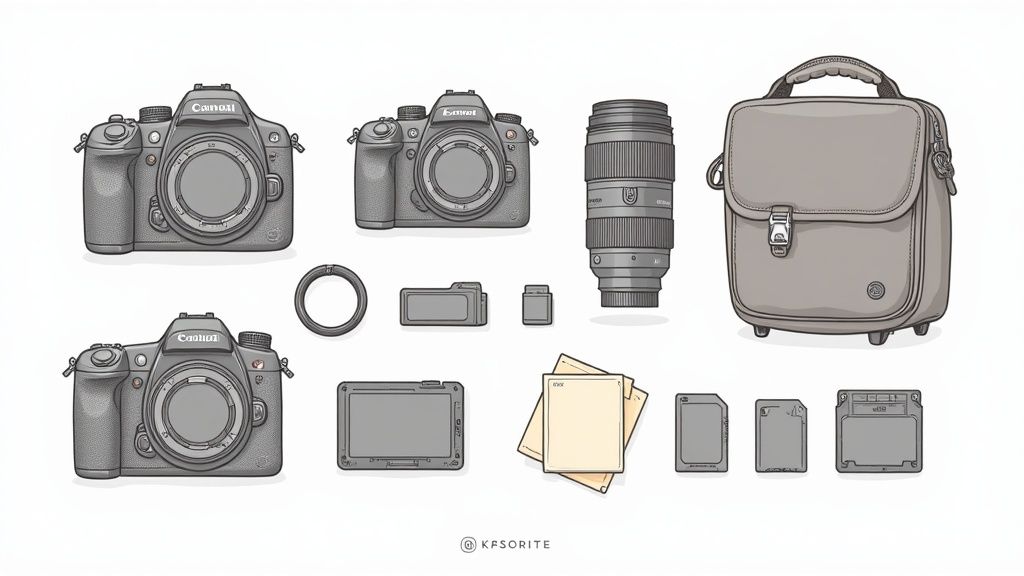
For professional photographers, arriving at a wedding with reliable, high-performance equipment is non-negotiable. A strategic gear investment and a bulletproof backup plan are the bedrock of confidence, ensuring that no moment is missed due to technical failure. This preparation involves more than just owning a good camera; it's about building a cohesive system that can handle any lighting condition, environment, or unforeseen challenge the day might present.
A well-curated kit allows for seamless transitions between intimate ceremony moments and dynamic reception action. From versatile lenses that capture both wide-angle scenes and tight portraits to backup bodies that are ready at a moment's notice, every piece of gear serves a critical purpose. This foresight is a key differentiator between an amateur and a professional, providing peace of mind for both the photographer and the couple who have entrusted them with their memories.
How to Implement This Seamlessly
Building a reliable kit requires a thoughtful balance of quality, versatility, and redundancy. A common professional setup might include two high-performance bodies like the Canon R5, paired with essential lenses such as an RF 24-70mm f/2.8 and an RF 70-200mm f/2.8. A more budget-conscious but still highly effective kit could feature two Canon 6D Mark II bodies with equivalent lenses.
- Dual Camera Bodies: Always carry two camera bodies. This not only serves as an instant backup but also allows for shooting with two different lenses simultaneously, eliminating time-consuming lens swaps.
- Essential Lenses: Cover the crucial focal lengths. A 24-70mm lens is perfect for group shots and environmental portraits, while a 70-200mm is ideal for capturing intimate ceremony moments from a distance.
- Backup Systems: Redundancy is key. For every hour of shooting, plan to have at least two backup memory cards. Carry a minimum of three fully charged batteries for each camera body.
Actionable Tips for Success
To ensure your gear strategy is one of the most effective wedding photography hints you implement, follow these professional practices:
- Invest in Low-Light Capability: Lenses with a wide aperture like f/2.8 are essential for handling dimly lit reception halls and churches without sacrificing image quality.
- Prioritize Durability: Opt for weather-sealed camera bodies and lenses. This provides crucial protection against unexpected rain or dust during outdoor ceremonies.
- Maintain Your Equipment: Regularly clean your sensors and lenses, and have your gear professionally serviced annually. Consider investing in equipment insurance for protection against theft or accidental damage.
7-Point Comparison: Wedding Photography Hints
| Item | Implementation complexity | Resource requirements | Expected outcomes | Ideal use cases | Key advantages |
|---|---|---|---|---|---|
| Golden Hour Shooting for Optimal Natural Lighting | Low–Moderate (timing coordination, scouting) | Minimal gear; location access and time window | Warm, flattering, dimensional images with natural rim light | Outdoor couple portraits, beach/vineyard sessions, first looks | Natural, soft light; less retouching; romantic mood |
| Strategic Pre-Wedding Planning and Shot Lists | Moderate–High (detailed scheduling, coordination) | Time for meetings, planning tools, venue walk‑throughs | Comprehensive coverage; fewer missed moments; smoother day | Full‑day weddings, multi‑photographer teams, complex logistics | Improves efficiency and client confidence; reduces stress |
| Posing Techniques for Flattering Couple and Group Portraits | Moderate (practice and clear direction) | Photographer skill and time with subjects | Flattering, consistent portraits that convey connection | Couple portraits, family/group photos, nervous subjects | Enhances appearance; repeatable results; guides clients |
| Advanced Lighting Setup Using Flashes and Modifiers | High (technical setup and tuning) | Flashes, modifiers, triggers, stands, batteries, assistants | Controlled, consistent lighting in low or harsh conditions | Indoor receptions, night shots, fill flash for midday sun | Extends shooting capability; precise creative control |
| Efficient Workflow and File Management Systems | Moderate (system setup and discipline) | Backup drives, software (Lightroom), cloud services | Secure data, faster editing, consistent deliveries | High-volume work, long-term archives, tight deadlines | Protects files; speeds post‑production; scalable process |
| Client Communication and Expectation Management | Moderate (ongoing effort and clarity) | CRM/tools, contracts, time for consultations | Clear expectations, fewer revisions, higher satisfaction | Personalized services, high‑value clients, repeat business | Builds trust; reduces disputes; improves client experience |
| Essential Gear Investment and Backup Strategy | Moderate (procurement and maintenance) | Multiple bodies/lenses, backups, insurance, maintenance | Reliable performance, redundancy, consistent image quality | Professional wedding coverage, travel, adverse conditions | Prevents missed shots; increases flexibility and reliability |
Bringing It All Together for a Flawless Photographic Story
The journey to creating a flawless wedding album is a collaborative art form, blending professional expertise with the authentic joy of the day. The collection of wedding photography hints explored in this guide serves as a comprehensive roadmap for every participant. From the couple meticulously planning their shot list to the photographer mastering golden hour light and the guests capturing candid moments, each role is crucial in weaving together the complete visual narrative of the celebration.
The Core Pillars of Photographic Success
The most resonant wedding stories are built on a foundation of preparation, communication, and technical skill. We've seen how strategic pre-wedding planning prevents day-of stress and ensures no cherished moment is missed. Similarly, understanding the nuances of posing, advanced lighting, and efficient file management elevates a professional's work from simply good to truly exceptional.
However, the professional's lens can only capture one perspective at a time. The true magic often lies in the moments happening all around them, which is where the collective eye of your guests becomes an invaluable asset.
Integrating Every Angle for a Richer Narrative
The most impactful takeaway is the power of synergy. A photographer's perfectly composed portrait is beautiful, but it becomes even more meaningful when placed alongside a guest's candid shot of the couple laughing just moments before. This is where modern solutions transform the experience.
Integrating a system for guest-sourced photos is one of the most practical and effective wedding photography hints you can implement. Tools that use simple QR codes remove all barriers, emphasizing ease of use with instant, app-free uploads. Imagine this:
- Display your event’s QR code at the venue entrance for guests to scan as they arrive.
- Place small, elegant cards with the QR code on reception tables for seamless access during the celebration.
- Include the code on a slide during the cocktail hour presentation for easy, instant photo uploads.
This effortless approach ensures you don't miss the heartfelt hug between cousins, the spontaneous dance-off, or the quiet, loving glance shared across the room. It seamlessly consolidates these precious, scattered memories into one central, organized gallery, complementing the professional's curated collection. Ultimately, by combining professional artistry with the warmth of guest contributions, you are not just documenting an event; you are preserving an entire ecosystem of love, joy, and community. The result is a richer, more authentic, and deeply personal photographic story that you will treasure for a lifetime.
Ready to effortlessly collect every precious moment from your special day? Implement the ultimate wedding photography hint by creating a centralized, app-free gallery for you and your guests. Visit WedPicsQR today to generate your unique QR code and build a complete, collaborative album that tells the full story of your celebration. Learn more at WedPicsQR.