
10 Actionable Photographing Wedding Tips for Stunning Results in 2026
Welcome to the ultimate guide on modern wedding photography. Far beyond just pointing and shooting, capturing a wedding is about telling a story filled with fleeting emotions, intricate details, and authentic connections. These 10 essential photographing wedding tips are designed to provide actionable strategies, helping you master everything from golden hour lighting to creating a seamless, collaborative photo experience. We'll explore technical skills, compositional artistry, and the modern tools that make collecting every precious memory easier than ever.
A key part of this modern approach is effortlessly gathering photos not just from your professional lens, but from every guest's perspective. Today, platforms like WedPicsQR are revolutionizing how we consolidate memories. By simply displaying your event's unique QR code at the venue entrance, on tables, or even on invitations, guests can upload their photos instantly with no app downloads required. This incredibly easy and seamless method creates a complete, 360-degree view of the celebration, blending professional shots with candid guest moments.
This comprehensive approach ensures no memory is missed. While our primary focus is on weddings, these techniques and tools are versatile enough for any major event, from milestone birthdays and corporate gatherings to family reunions and more. Let’s dive into the techniques that will help you document every laugh, tear, and dance move with confidence and creativity.
1. Master the Golden Hour for Optimal Lighting
One of the most essential photographing wedding tips is to schedule key portraits during the golden hour. This magical period, occurring shortly after sunrise and before sunset, bathes the scene in a soft, warm, directional light. This natural lighting is incredibly flattering, minimizing harsh facial shadows, reducing the need for complex flash setups, and creating a romantic, ethereal glow that is difficult to replicate at any other time of day. The warm tones enrich skin tones and add a dreamy quality to backgrounds, resulting in stunning images that often require less post-processing.
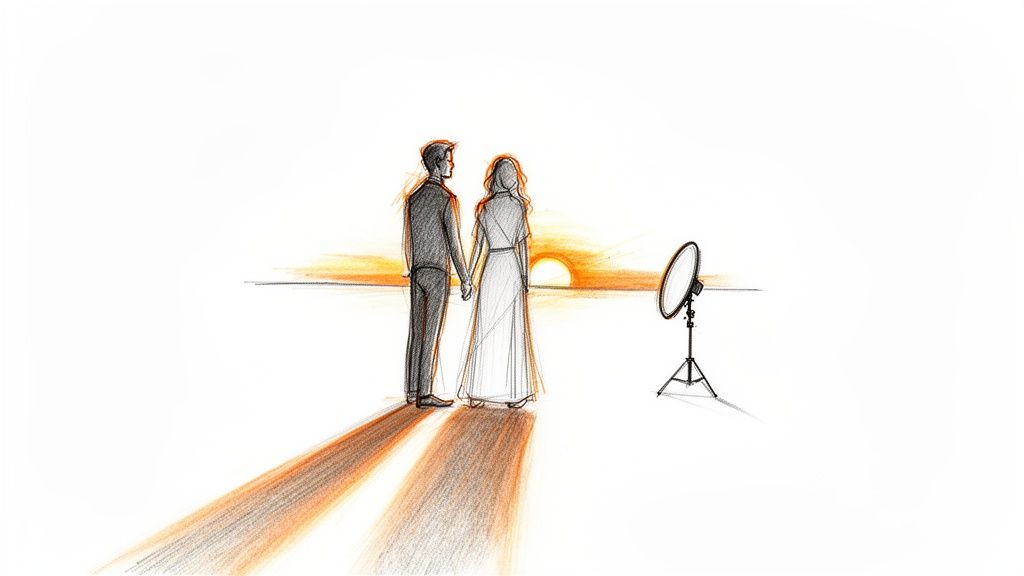
Renowned photographers like Jasmine Star and destination wedding specialists in locations from Santorini to Bali build their shooting schedules around this specific time. They understand that the low-angle sun creates beautiful depth, lens flare, and long, dramatic shadows that add a cinematic feel to portraits.
How to Implement This Tip
To make the most of this fleeting window, proactive planning is crucial. Collaborate with the couple to build a 30 to 45-minute portrait session into the wedding day timeline specifically for golden hour.
- Scout in Advance: Visit the venue at golden hour on a day before the wedding to identify the best spots and see how the light interacts with the landscape.
- Position Your Subjects: Place the couple so the sun is behind them (backlighting) for a beautiful rim light effect or at a 45-degree angle to create soft, dimensional shadows.
- Use Your Tools: Employ a reflector to bounce light back onto the couple's faces, filling in any shadows and adding a catchlight to their eyes.
- Capture Guest Moments: While you focus on the couple, guests are often enjoying the beautiful light too. Encourage them to capture and share their own golden hour photos by placing a WedPicsQR code on cocktail tables. Guests can scan it with their phones for instant photo uploads to a central gallery—no app is ever required, making it incredibly easy to use.
2. Capture Authentic Candid Moments Over Posed Shots
While posed portraits have their place, a key practice in modern photographing wedding tips is prioritizing authentic, unscripted moments. Candid photography captures the genuine emotions of the day: the unrehearsed laughter, spontaneous tears, warm hugs, and quiet glances between the couple and their guests. These images tell the real story of the wedding, preserving the atmosphere and connections in a way that staged photos simply cannot. This documentary-style approach requires patience, anticipation, and an eye for human interaction.
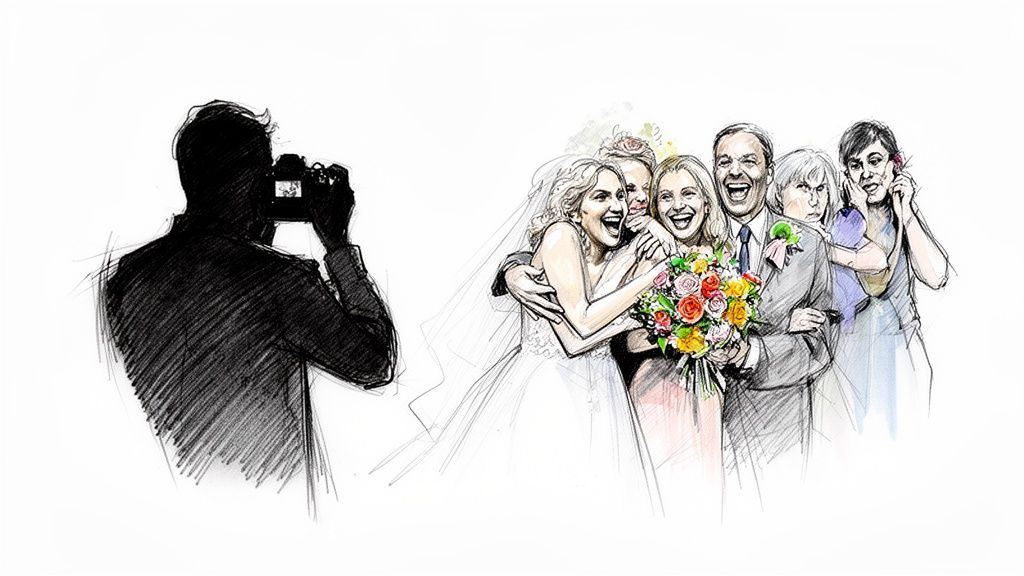
Acclaimed photographers like Cristina Lozito are renowned for their ability to capture these fleeting, emotional moments. Their portfolios demonstrate that the most powerful images often come from genuine interactions, not perfect poses. This focus on authenticity is why bridal magazines consistently feature candid moments and why documentary-style wedding films feel so impactful; they capture the true spirit and joy of the celebration.
How to Implement This Tip
To master candid photography, you must become an observer who can anticipate moments before they happen. This involves shifting your focus from directing the scene to documenting it as it unfolds naturally.
- Position Strategically: Instead of being the center of attention, find a discreet vantage point during key events like the vows, speeches, and first dance. This allows you to capture raw reactions from the couple and their guests.
- Use Burst Mode: During high-emotion moments such as the first kiss or the cake cutting, use your camera’s burst mode to capture a rapid sequence of frames. This increases your chances of catching the perfect, split-second expression.
- Look Beyond the Viewfinder: Constantly scan the room with your own eyes, not just through the lens. Watch for small interactions: a shared joke between friends, a proud parent’s tearful glance, or a child's playful antics.
- Encourage Guest Contributions: You can't be everywhere at once. Empower guests to capture their own candid shots with a simple QR code. Display your event’s QR code at the venue entrance or on invitations for instant photo uploads. Guests can scan the code to seamlessly add photos from their phones to a shared gallery, providing a comprehensive, multi-angle view of the day with no app download needed.
3. Shoot in Manual Mode with Exposure Compensation Awareness
For photographers aiming for professional-grade consistency, one of the most critical photographing wedding tips is to shoot in manual mode. This approach gives you complete creative control over the exposure triangle: aperture, shutter speed, and ISO. Unlike automatic modes that can be tricked by challenging light, manual mode ensures your exposures remain consistent shot-to-shot, which is vital for creating a cohesive final gallery and simplifying your editing workflow. It allows you to make deliberate artistic choices, from a shallow depth of field for portraits to a fast shutter speed for capturing motion on the dance floor.
Leading educational platforms like CreativeLive and renowned wedding photographers universally advocate for mastering manual mode. They teach that this skill is non-negotiable for handling a wedding day's rapidly changing lighting environments, from a dark church to a bright, sunlit reception. This control prevents the camera from making incorrect exposure decisions, such as underexposing a bride in a white dress against a dark background.
How to Implement This Tip
Mastering manual mode requires practice, but a systematic approach makes it manageable. The goal is to set your core exposure and then make minor adjustments as needed.
- Set Your Baseline: Start by metering for the subject's skin tones, which are often the most important element to expose correctly. Set your ISO first based on the ambient light, then choose your aperture for the desired depth of field, and finally adjust the shutter speed to achieve a balanced exposure.
- Use Exposure Compensation: Even in manual mode, you can use your camera’s exposure compensation dial. This is a quick way to override the light meter and make subtle adjustments for creative effect or to correct for tricky backlighting without changing your core settings.
- Check Your Histogram: Don't rely solely on your camera's LCD screen to judge exposure, as its brightness can be misleading. Regularly check the histogram to ensure you are not losing detail in the highlights (clipping whites) or shadows (crushing blacks).
- Maintain Color Consistency: To help align the color balance from guest photos with your professional shots, you can provide a fun, subtle prompt. Use WedPicsQR to display a message with the gallery QR code that says, “Quick tip! Take a snap of something pure white in this light before you start shooting.” This gives you a reference point for correcting white balance in guest uploads later.
4. Scout Locations and Plan Shooting Angles in Advance
One of the most impactful photographing wedding tips is to move from reactive shooting to intentional planning by scouting the venue beforehand. A pre-wedding visit allows you to identify optimal shooting locations, understand the day's light patterns, anticipate guest flow, and plan for potential obstacles. This proactive approach ensures you are fully prepared to capture stunning images, regardless of what the day brings, transforming potential challenges into creative opportunities.
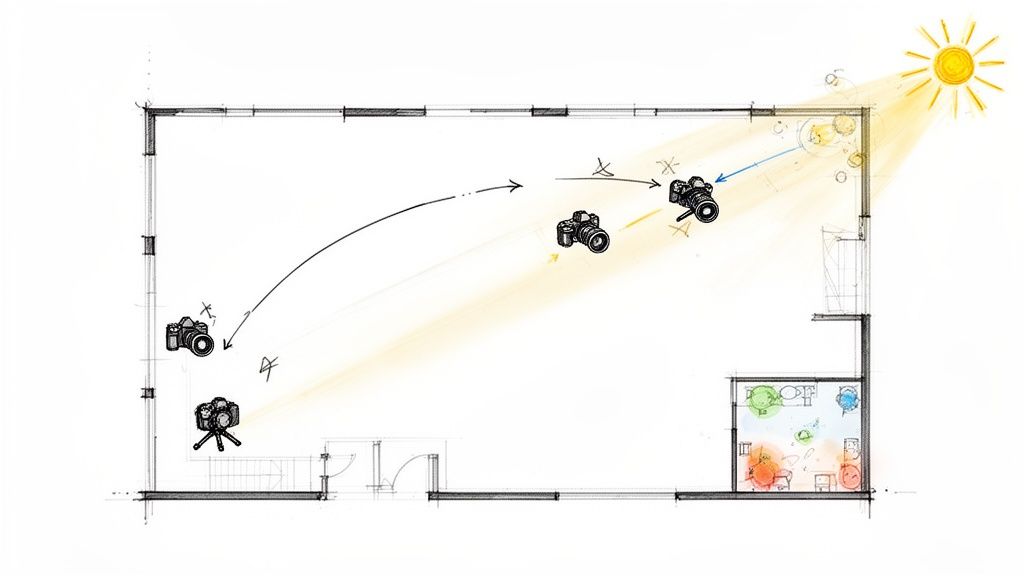
This practice is fundamental for professional photographers, especially those shooting destination weddings where familiarity with the environment is zero. Masterclasses and professional training associations emphasize venue assessment as a non-negotiable step. It's the difference between hoping for good shots and knowing exactly where and when to get them, ensuring a smooth, efficient, and creative workflow on the wedding day.
How to Implement This Tip
Effective scouting is more than just a quick walkthrough; it’s a strategic analysis of the environment. Aim to visit the venue at the same time of day and, if possible, during the same season as the wedding to see the light as it will be.
- Map Key Locations: Identify primary spots for the ceremony, reception, and portraits, but also look for unique, less obvious backdrops that can add variety.
- Plan for Contingencies: Locate and assess backup indoor locations in case of bad weather. Make sure these spaces have adequate lighting and space.
- Coordinate with Staff: Meet with the venue coordinator to confirm access times and any restrictions. Ask about power outlets for charging gear and lighting setups.
- Leverage Guest Photos: During your scout, identify scenic spots where guests will naturally congregate. You can place a WedPicsQR code in these areas on a small sign, prompting guests to "Scan to share your photos from this spot!" This directs them to capture and instantly upload images from the best angles, enriching the couple's final gallery without requiring any app downloads.
5. Use Fast Prime Lenses for Superior Bokeh and Low-Light Performance
A critical part of delivering high-quality wedding photos is choosing the right equipment, and one of the best photographing wedding tips is to prioritize fast prime lenses. These lenses have a fixed focal length (like 35mm, 50mm, or 85mm) and a wide maximum aperture, typically between f/1.4 and f/2.0. This wide opening allows more light to reach the sensor, making them exceptional performers in dimly lit environments like churches, reception halls, or during evening events without relying heavily on flash.
The wide aperture also creates a shallow depth of field, resulting in a beautiful background blur known as bokeh. This effect isolates the subject, making the couple pop against a creamy, non-distracting background for truly cinematic portraits. Esteemed wedding photographers often rely on a "holy trinity" of primes, such as the Canon EF 85mm f/1.4L, Sony 85mm f/1.4 GM, or the Sigma Art series 35mm f/1.4, for their sharpness, speed, and artistic rendering. To learn more about selecting the right tools, you can explore this guide to the best gear for wedding photography.
How to Implement This Tip
Integrating prime lenses into your workflow requires a bit of practice, as you'll "zoom with your feet" by moving closer to or farther from your subjects.
- Build Your Kit: Start with a versatile 50mm f/1.8, an affordable yet powerful option. Expand to include a 35mm for wider, environmental shots and an 85mm for flattering, tight portraits.
- Master Low Light: In dark venues, use the wide aperture (e.g., f/1.8) combined with a fast shutter speed (like 1/250s) to freeze motion during candid moments like the first dance.
- Focus on Flattering Portraits: Use an 85mm lens for couple portraits to achieve beautiful compression and stunning bokeh that separates them from the background.
- Balance Professional and Guest Photos: While you focus on artistic prime lens shots, encourage guests to capture wide-angle candids. Place a WedPicsQR code on tables or at the bar, allowing guests to instantly upload their smartphone photos to a shared gallery. This seamless process provides a comprehensive view of the day without requiring anyone to download an app.
6. Create a Detailed Shot List and Timeline Coordinating with the Couple
One of the most critical photographing wedding tips for a seamless day is to build a comprehensive shot list and a realistic timeline in collaboration with the couple. A well-planned schedule acts as your roadmap, ensuring every key moment, from the first look to the final dance, is captured without causing stress or delays. This foundational document prevents missed opportunities and allows you to focus on creativity rather than logistics on the wedding day. A prioritized list helps you distinguish between must-have shots and nice-to-have images, ensuring you capture what matters most to the couple.
Experienced wedding planners and photographers know that a shared, detailed timeline is the secret to a smooth event. Platforms like WeddingWire often provide templates that can be customized, but the real value comes from discussing expectations with the couple and their planner. This collaborative effort ensures that enough time is allocated for family portraits, travel between venues, and unexpected moments, preventing a rushed and stressful experience for everyone involved.
How to Implement This Tip
Effective planning requires clear communication and a structured approach. Work with the couple weeks in advance to finalize the schedule and shot list, sharing it with other key vendors like the videographer and DJ to ensure everyone is synchronized.
- Prioritize the Shot List: Tier your list into categories: "must-have" (ceremony, first kiss), "important" (specific family groupings), and "nice-to-have" (creative venue details). This helps manage time effectively.
- Build in Buffer Time: Always add 15 to 20-minute buffers between major segments like the ceremony, family photos, and reception entrance. This absorbs small delays without derailing the entire day.
- Coordinate with the Planner: Your timeline must align with the official wedding day schedule managed by the planner. This collaboration prevents conflicts and ensures a cohesive flow.
- Schedule Guest Photo Collection: Designate specific times, like the cocktail hour or reception, for guests to contribute their photos. A simple QR code on tables or at the bar makes it incredibly easy for guests to scan and instantly upload candid shots to a shared album without needing an app. You can learn more about creating the ideal photography timeline for a wedding to integrate these moments seamlessly.
7. Master Composition Fundamentals: Rule of Thirds, Leading Lines, and Framing
Beyond perfect lighting and a sharp focus, strong composition is one of the most critical photographing wedding tips for transforming a simple snapshot into a breathtaking work of art. Techniques like the rule of thirds, leading lines, and framing guide the viewer's eye through the image, creating depth, balance, and a powerful narrative. These fundamentals are what elevate technically correct photos to visually compelling stories, turning an ordinary moment into an emotional centerpiece.
Acclaimed photographers build their portfolios on these principles. You can see the rule of thirds expertly applied in Jasmine Star's work, where subjects are placed off-center to create dynamic tension. Architectural framing is a hallmark of destination wedding photography, using archways or windows to add layers and context to the couple's portrait. Similarly, the aisle, string lights, or natural pathways create leading lines that draw you directly to the focal point of the ceremony.
How to Implement This Tip
Integrating these techniques requires a conscious effort to see the scene not just as it is, but as it could be framed. Practice identifying compositional elements during your venue scout to prepare for the wedding day.
- Activate Your Grid: Enable the grid overlay in your camera's viewfinder or on the LCD screen. This visual guide makes it easy to position key elements along the lines or at their intersections, mastering the rule of thirds.
- Find Natural Lines: Look for existing lines in the environment, such as paths, fences, architectural details, or rows of chairs. Position the couple along these lines to guide the viewer’s eye toward them.
- Use Foreground Framing: Incorporate elements like flowers, foliage, or doorways in the foreground to create a natural frame around the couple. This adds a sense of depth and intimacy to the shot.
- Encourage Guest Creativity: Guide guests to take better photos by including a simple composition tip next to your WedPicsQR code. A small sign saying, "Capture the moment! Place the couple off-center for a more creative shot," can dramatically improve the quality of photos instantly uploaded to your seamlessly consolidated gallery.
8. Backup Power, Storage, and Equipment as Critical Redundancy
A fundamental rule in this field of photography is that there are no second chances. One of the most critical photographing wedding tips is to build comprehensive redundancy into every aspect of your workflow. This means having backups for your camera bodies, lenses, batteries, and memory cards, as equipment can and does fail at the most inopportune moments. A corrupted card or a dead battery can mean missing a once-in-a-lifetime shot, making a robust backup plan non-negotiable for any professional.
Seasoned wedding photographers never arrive at a venue with just one of anything. They operate with the mindset that anything that can go wrong, will. Professionals like Susan Stripling and Jerry Ghionis are known for their meticulous preparation, which includes multiple camera bodies, an arsenal of lenses, and a rigorous data backup process that begins the moment a card is full. This level of preparedness ensures they can deliver a complete gallery regardless of technical failures.
How to Implement This Tip
Protecting irreplaceable wedding photos is paramount, making comprehensive modern data backup strategies for photographers a critical component of your business operations. A multi-layered approach ensures your clients' memories are safe from capture to delivery.
- Build a Redundant Kit: Carry a minimum of two camera bodies, ensuring they can share lenses and batteries for maximum efficiency. Have at least three fully charged batteries for each camera and multiple memory cards.
- Implement a Card Strategy: Use cameras with dual card slots set to record backups simultaneously. Rotate between 3-4 high-speed (UHS-II, V90) cards per camera, and format them in-camera before each wedding.
- On-Site and Off-Site Backups: Bring a portable SSD like a Samsung T7 Shield to back up memory cards during downtime at the reception. After the event, immediately back up all files to at least two separate locations, such as a home server and a cloud service like Backblaze.
- Create a Pre-Wedding Checklist: Before leaving for a wedding, run through a checklist: charge all batteries, format all memory cards, clean lenses, and test your backup drives. This simple routine prevents easily avoidable errors.
9. Establish Clear Communication and Manage Client Expectations Beforehand
Beyond technical skill, one of the most crucial photographing wedding tips is mastering client communication. Setting clear expectations from the first interaction prevents misunderstandings and builds a foundation of trust. This involves transparently discussing your artistic style, deliverables, timelines, and processes, ensuring the couple knows exactly what to expect on their big day and long after. When couples understand your vision and workflow, they feel more relaxed, confident, and satisfied with the final product.
Top-tier wedding photographers, like those featured on platforms like The Knot and WeddingWire, consistently emphasize that a detailed contract and pre-wedding consultations are non-negotiable. They use comprehensive questionnaires and in-person meetings not just to plan shots, but to build genuine rapport. This proactive approach ensures every key detail, from post-processing timelines to handling unexpected weather, is agreed upon well in advance, leading to a smoother experience for everyone.
How to Implement This Tip
Effective communication is a continuous process that begins with the initial inquiry and extends beyond the final photo delivery. Implement a structured communication strategy to manage expectations effectively.
- Be Radically Transparent: Clearly define your shooting style, editing process, and what makes your approach unique. Provide a portfolio that consistently reflects the work you will deliver.
- Use a Comprehensive Contract: Utilize a professional contract (templates from PPA or WPPI are excellent starting points) that details deliverables, coverage hours, delivery timelines, rush fee policies, and image rights.
- Schedule a Pre-Wedding Consultation: Use this meeting to review the final timeline, confirm the shot list, and build a personal connection. This is the perfect time to understand their vision and any specific family dynamics.
- Complement Your Coverage: Introduce a tool like WedPicsQR as a fun, collaborative way for guests to contribute their own photos. Explain that it provides a complementary stream of candid moments from various perspectives. Guests simply scan a QR code placed on welcome signs or cocktail tables for instant photo uploads—no app download required, ensuring a seamless and easy experience for everyone.
10. Post-Processing Workflow and Detail Shots for Cohesive Storytelling
One of the most impactful photographing wedding tips for creating a professional gallery is to pair a consistent post-processing workflow with deliberate detail shots. A standardized editing style ensures every photo, from portraits to candids, shares a cohesive aesthetic. Meanwhile, detail shots of rings, florals, invitations, and décor serve as the narrative glue, weaving the main events together and enriching the story of the day. This combined approach transforms a collection of images into a compelling, album-ready visual narrative.
Leading photographers and wedding magazines understand this synergy. Preset creators like VSCO and modern film emulation profiles offer tools to achieve a signature look, while editorial features consistently highlight the small details that define a wedding's theme and personality. By dedicating time to both editing consistency and capturing these quiet moments, you elevate the final gallery from a simple record to an artful story. After perfecting your wedding shots, understanding how to prepare them for online galleries is the next step. Learn more about optimizing images for web to ensure fast loading times and a great viewing experience.
How to Implement This Tip
Achieving a polished, story-driven gallery requires a methodical approach to both shooting and editing. By systemizing your process, you can deliver consistently beautiful results.
- Develop Signature Presets: Create 2-3 custom presets in your editing software for different lighting conditions (e.g., golden hour, indoor reception, overcast day). This ensures a uniform look across the entire event. For a deeper dive, explore this beginner's guide to wedding photo editing software.
- Schedule Detail Photography: Carve out time to capture details without distractions. Photograph the rings and invitation suite with soft window light during getting ready, and capture the reception décor during cocktail hour before guests enter the space.
- Use the Right Lens: A fast prime lens (like a 50mm f/1.4 or a 100mm macro) is excellent for isolating details with a shallow depth of field, making them stand out with crisp focus.
- Incorporate Guest Perspectives: The details your guests notice can add a unique layer to the story. Place a WedPicsQR code on guest book tables or menus so they can instantly upload their photos of the cake, centerpieces, or unique décor. This enriches the final gallery with candid, diverse perspectives, all gathered effortlessly and seamlessly in one place.
10-Point Wedding Photography Tips Comparison
| Technique | Implementation complexity | Resource requirements | Expected outcomes | Ideal use cases | Key advantages |
|---|---|---|---|---|---|
| Master the Golden Hour for Optimal Lighting | Moderate — requires precise scheduling and scouting | Low gear needs (reflector, minimal lighting), time coordination | Soft, warm, flattering portraits with reduced post-processing | Bridal portraits, outdoor couple sessions near sunrise/sunset | Natural cinematic light, consistent skin tones, less artificial lighting |
| Capture Authentic Candid Moments Over Posed Shots | High — constant anticipation and positioning | High shooting volume, fast AF camera, high-frame-rate support | Emotionally rich, documentary-style images and varied gallery content | Vows, toasts, reception dance floor, documentary coverage | Genuine emotion, strong narrative, highly shareable images |
| Shoot in Manual Mode with Exposure Compensation Awareness | High — technical knowledge and active monitoring | Skilled operator, metering tools, histogram checks | Consistent exposures and color across varying lighting | Mixed-light venues, formal coverage, situations needing exposure control | Full exposure control, predictable results, streamlined editing |
| Scout Locations and Plan Shooting Angles in Advance | Moderate — time-consuming prep work | Time, travel, photos/notes, venue coordination | Fewer surprises, efficient on-day workflow, better compositions | Destination weddings, complex venues, first-look and portrait planning | Saves time on day, enables creative angles, contingency readiness |
| Use Fast Prime Lenses for Superior Bokeh and Low-Light Performance | Low–Moderate — technique and movement required | Financial investment in primes, backups, minimal extra weight | Sharp subjects, smooth bokeh, better low-light performance | Portraits, low-light receptions, detail and dance coverage | Exceptional subject isolation, faster AF, lighter kit for long days |
| Create a Detailed Shot List and Timeline Coordinating with the Couple | Moderate — requires coordination and clear priorities | Time, communication tools, shared docs (Google Doc/PDF) | Coverage of critical moments, smoother day flow, reduced stress | Large weddings, tightly scheduled events, multi-vendor days | Predictability, improved client satisfaction, efficient time use |
| Master Composition Fundamentals: Rule of Thirds, Leading Lines, Framing | Low–Moderate — practice and conscious framing | Minimal (training, camera grid overlays) | Visually compelling images with stronger storytelling | All wedding scenarios where elevating visuals matters | Improved balance, guided viewer attention, versatile across scenes |
| Backup Power, Storage, and Equipment as Critical Redundancy | Moderate — processes and testing required | High (duplicate bodies, spare lenses, batteries, SSDs, cloud) | Minimized risk of data loss or gear failure, continuous coverage | All weddings, essential for high-stakes or remote jobs | Reliability, peace of mind, robust data protection |
| Establish Clear Communication and Manage Client Expectations Beforehand | Moderate — documentation and client meetings | Time, contracts, templates, questionnaires | Fewer disputes, clear deliverables, aligned expectations | New clients, complex packages, destination or multi-day weddings | Reduced scope creep, protected business, higher referral rates |
| Post-Processing Workflow and Detail Shots for Cohesive Storytelling | Moderate–High — system development and editing time | Software (Lightroom/Photoshop), presets, time or assistants | Cohesive gallery aesthetic and narrative-driven albums/slideshows | Album creation, online galleries, branding-focused portfolios | Consistent look, faster batch editing, richer narrative through details |
Bringing It All Together: Your Blueprint for Flawless Wedding Photography
Mastering the art of wedding photography is a dynamic journey, one that beautifully merges technical precision with heartfelt storytelling. Throughout this guide, we've explored a comprehensive suite of photographing wedding tips designed to elevate your craft from good to truly unforgettable. From the foundational importance of scouting locations and mastering your gear to the artistic nuances of capturing candid emotions and leveraging the golden hour, each piece of advice serves as a vital component in your creative toolkit. The journey to exceptional wedding photography doesn't end with technical skill; it's about building a complete, immersive narrative of the day.
By implementing these strategies, you move beyond simply taking pictures; you become a visual historian. You learn to anticipate the fleeting smiles, the quiet tears, and the bursts of laughter that define a celebration. You understand that a detailed shot list and a collaborative timeline are not just logistical necessities but the very framework upon which a seamless, stress-free day is built. Redundancy in your gear and a clear post-processing workflow are your safety nets, ensuring that every precious moment is not only captured but also preserved with professional polish.
Key Takeaways for Lasting Impact
The most impactful wedding galleries are those that feel authentic, complete, and deeply personal. To achieve this, remember these core principles:
- Preparation is Paramount: Success is born long before you press the shutter. Thoroughly scouting your venue, creating a detailed timeline with the couple, and having redundant equipment are non-negotiable.
- Embrace Authenticity: While posed shots have their place, the real magic lies in the unscripted moments. Your ability to become an unobtrusive observer is key to capturing the genuine spirit of the day.
- Light is Your Language: Whether you're harnessing the soft glow of the golden hour or mastering off-camera flash, your command of light will ultimately define the mood and quality of your images.
- Storytelling is the Goal: Every choice, from your lens selection to your compositional framing, should serve the larger narrative. The detail shots, the grand portraits, and the candid interactions all weave together to tell a cohesive story.
Expanding the Narrative with Guest Perspectives
In today's connected world, a truly comprehensive story includes more than just the professional's viewpoint. The modern approach to wedding photography embraces the moments captured by friends and family, the spontaneous selfies, and the unique angles seen through a guest's eyes. This is where integrating a tool like WedPicsQR becomes a game-changer. It bridges the gap between your professional coverage and the rich, diverse perspectives of every attendee.
Imagine empowering guests to contribute to the wedding album effortlessly. By placing a simple QR code on welcome signs, cocktail napkins, or table centerpieces, you invite everyone to share their photos instantly. There's no app to download, no complicated login process, and no friction. Guests simply scan, select their photos, and upload. This seamless experience ensures that hundreds of priceless moments, which might otherwise be lost on individual phones, are consolidated into one central, organized gallery.
While this technology is a perfect fit for weddings, its versatility makes it an invaluable asset for any event imaginable, from corporate conferences and family reunions to milestone birthdays and community fundraisers. By adopting such a forward-thinking tool, you not only provide a more complete service but also enhance the overall event experience. The final collection becomes a collaborative masterpiece, a rich tapestry woven from both your professional artistry and the heartfelt contributions of every person present. This is the new standard for creating truly flawless wedding photography collections.
Ready to effortlessly collect every memory from every guest? Create your own custom QR code gallery with WedPicsQR and transform how you capture and share event photos. Visit WedPicsQR to get started and ensure no moment is missed.