
Your Guide to the Perfect Wedding Photo Timeline
A wedding photo timeline is more than just a schedule; it's the hidden blueprint for a relaxed, seamless wedding day. Think of it as a detailed script that maps out every photo-worthy moment, from the first champagne pop during hair and makeup to the final sparkler send-off.
It's the strategic plan that keeps your photographers, vendors, and the entire wedding party perfectly in sync, ensuring every important shot is captured without anyone ever feeling rushed. Honestly, this simple document is the secret sauce to a beautifully documented celebration.
Why a Photo Timeline Is Your Best Wedding Investment
Let's be real: a well-crafted wedding photo timeline is about protecting two things—your memories and your sanity. Without one, the day can quickly dissolve into chaos, with key moments missed and valuable time wasted trying to wrangle people for photos.
A clear schedule completely transforms that potential stress into a smooth, enjoyable experience. It frees you up to actually be present and savor every moment, knowing your photographer is quietly working their magic in the background. A solid photo timeline is a non-negotiable part of any comprehensive wedding planning guide, making sure the entire day flows beautifully.
It’s wild to think how far wedding photography has come. The whole thing kicked off back in the 1840s with Queen Victoria and Prince Albert’s iconic portrait. Back then, camera exposures could take up to 8 hours, so getting shots on the actual wedding day was impossible. The real shift happened in the 1960s and 70s when photojournalism took over, prioritizing authentic, candid moments over stuffy, posed shots—a trend that’s still going strong today.
Key Benefits of a Photography Timeline
Creating a timeline isn't just about organizing your photographer; it directly impacts the feel of your entire wedding day. Here’s a quick look at the biggest advantages.
| Benefit | How It Improves Your Wedding Day |
|---|---|
| Stress Reduction | Eliminates the "what's next?" panic, letting you relax and be present. |
| Better Photos | Ensures ideal lighting conditions and enough time for creative, un-rushed shots. |
| Vendor Coordination | Keeps everyone (DJ, caterer, planner) on the same page, preventing awkward gaps. |
| Protects Your Investment | Guarantees you get all the photos you paid for, from details to key portraits. |
| Guest Experience | Prevents guests from waiting around endlessly during cocktail hour. |
Ultimately, the timeline is the single best tool for ensuring your day unfolds just as you imagined.
Capturing More Than Just Posed Portraits
Today’s timelines are all about capturing the full story, and that includes all the candid, heartfelt, and hilarious moments your guests see. This is where seamlessly consolidating photos with a QR code becomes an absolute game-changer.
By building guest photo collection right into your timeline, you create a richer, more complete gallery of your day.
Imagine this: your professional photos capture the perfect, cinematic kiss at the altar. At that exact same moment, a guest’s photo captures your grandmother wiping away a joyful tear in the front row. Both are priceless, and a modern timeline makes room for both.
Gathering these photos is incredibly easy. Using an app-free, instant upload system, your guests can contribute to your album in seconds. Display your event’s QR code at the venue entrance or on invitations for instant photo uploads. It’s an effortless way to make sure everyone, no matter their tech skills, can share their unique perspective.
And while our primary focus is on weddings, this simple method is incredibly versatile for so much more:
- Birthdays: Finally get all the photos of the cake, the surprise, and the dancing in one place.
- Corporate Gatherings: Seamlessly consolidate team photos from conferences, retreats, and holiday parties without chasing people on Slack.
- Family Reunions: Create a collective album of memories from every generation, all uploaded instantly and with no app required.
At the end of the day, a thoughtful wedding photo timeline is your roadmap to a stress-free celebration and a complete, authentic collection of memories you'll treasure forever.
Crafting Your Schedule from Hairpins to Sparklers
Think of your wedding photo timeline as the secret backbone of your entire day. It’s more than just a list of events; it's the choreography that ensures every moment, from the quiet pre-ceremony jitters to the wild reception, is captured beautifully. A solid plan means you get every shot you’ve dreamed of without ever feeling rushed.
The real goal here is to create a schedule that flows so smoothly you barely notice it. By mapping out realistic time blocks for each part of the day, you build in precious breathing room for those unscripted, magical moments. This is how you turn a simple schedule into a documented story you'll treasure forever.
Pre-Ceremony: The Foundation of Your Day
The morning of your wedding is pure magic. It’s buzzing with emotion and filled with beautiful details, making it a non-negotiable part of your photography timeline.
- Hair & Makeup (2-3 hours): Realistically, you’ll want to block out about 90 minutes for the bride's hair and makeup. For bridesmaids and family members, plan on 45-60 minutes each. Staggering start times is key. A great pro tip is to have your photographer arrive during the final hour to catch all those finishing touches and the fun, celebratory vibe.
- Detail Shots (30-45 minutes): While everyone is getting glammed up, your photographer can focus on capturing the little things—the dress, rings, shoes, invitations, and bouquets. To make this a breeze, gather all these items in one spot ahead of time. It saves a ton of time and stress.
- Getting Dressed (30 minutes): This is a huge moment, so don't rush it. Give yourself plenty of time to slip into your gown or suit. These photos, often with a parent or best friend helping out, are some of the most emotional and heartfelt images of the entire day.
First Look and Portraits: The Heart of the Timeline
This is where the money shots happen. Deciding to do a "first look" can completely change the flow of your day, often for the better. It lets you get most of the formal photos done before the ceremony even starts. With over 55% of US couples now opting for a first look, it’s a popular way to calm those pre-ceremony nerves and share an incredibly intimate moment, just the two of you.
The most important element in photography is light. Planning your portraits around the best natural light—often in the late afternoon—can elevate your photos from good to absolutely stunning.
Of course, your wedding day schedule isn't just about photos. It's also about coordinating all the other moving parts, like final fittings for custom suits for weddings, to ensure every detail is perfect. After the first look, block out dedicated time for your couple's portraits, followed by photos with your wedding party and immediate family. For a more detailed guide on structuring all of this, our event planning timeline template is a fantastic place to start.
Global Timelines and Cultural Rhythms
It’s always fascinating to see how wedding planning schedules vary around the world, which directly shapes the photo timeline. In the US and UK, couples often plan for 15-16 months, leaving plenty of time for detailed shot lists and coordinating with vendors.
In contrast, timelines in India are often much quicker, averaging just 5-6 months. This faster pace impacts everything from booking venues to photographer prep, and an experienced photographer knows how to roll with it. It’s a great reminder that there’s no one-size-fits-all approach to planning the perfect day.
Sample Timelines for Different Wedding Styles
A wedding photo timeline isn't a one-size-fits-all template. Think of it more as a reflection of your day's unique personality and rhythm. Whether you're planning a massive traditional bash or a quiet micro-wedding with your inner circle, the structure of your photography needs to match the flow of the celebration.
I've put together four different sample timelines below. Use these as a launchpad to build a schedule that feels right for you—one that makes sure we capture every last important moment without making your day feel like a frantic photoshoot.
The Traditional Timeline (No First Look)
This one's for the romantics who have always dreamed of that heart-stopping, down-the-aisle reveal. We'll keep that moment sacred and build the entire portrait schedule for after you've officially said, "I do."
- 1:00 PM: Photographer arrives. Time to capture all those gorgeous details—the dress, rings, invitations—and the buzz of getting ready.
- 2:30 PM: The bride gets into her dress. While that's happening, we'll start separate photos of each wedding party.
- 3:30 PM: Time for the couple to hide away as guests begin arriving.
- 4:00 PM: Ceremony begins.
- 4:30 PM: Guests head to cocktail hour.
- 4:40 PM: This is our power hour! We'll knock out family formals, full wedding party photos, and finally, your portraits as a newly married couple.
- 5:45 PM: You get to sneak in for the tail end of cocktail hour.
- 6:00 PM: Grand entrance into the reception.
Let's be real: the biggest challenge here is the clock. That cocktail hour window is tight for all your formal portraits. A detailed, must-have shot list is non-negotiable to keep things moving smoothly.
The First Look Timeline
There's a reason this modern approach is so popular. A "first look" is an intimate, private moment for just the two of you before the ceremony whirlwind kicks off. By getting the formal photos done early, you free yourself up to actually enjoy your cocktail hour with your guests.
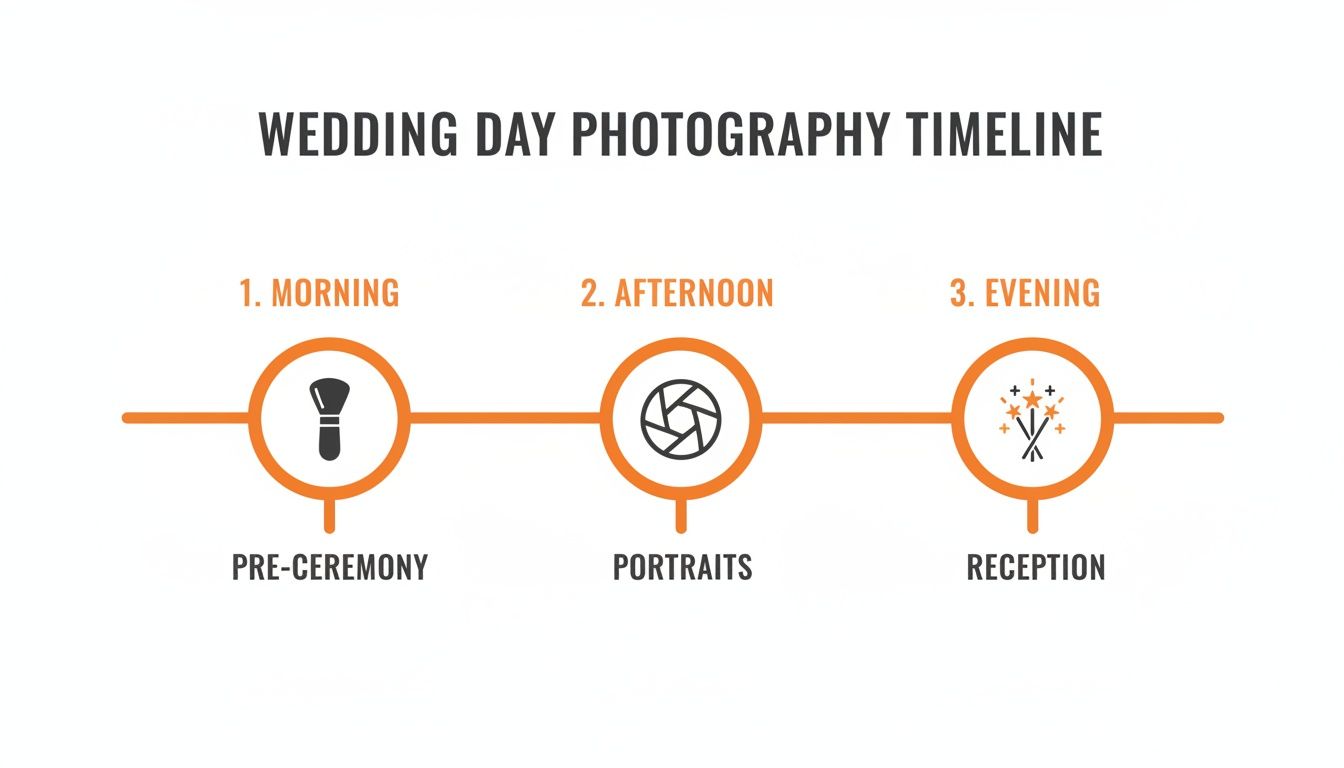
This graphic really shows how a structured flow ensures all the critical moments are captured without feeling rushed, making the entire day feel more relaxed for everyone involved.
Deciding between these two very different flows can be tough. Here’s a side-by-side comparison to help you visualize what your day could look like with either choice.
First Look vs Traditional Timeline Showdown
This table compares the wedding day flow with and without a first look, helping you decide which approach best fits your priorities.
| Timeline Event | With a First Look (Example Time) | Without a First Look (Example Time) |
|---|---|---|
| Photographer Arrives | 12:00 PM | 1:00 PM |
| Getting Ready Photos | 12:00 PM - 1:30 PM | 1:00 PM - 2:30 PM |
| First Look | 2:00 PM | N/A (Aisle reveal) |
| Couple's Portraits | 2:15 PM - 3:00 PM | 4:40 PM - 5:15 PM |
| Wedding Party Photos | 3:00 PM - 3:30 PM | 4:40 PM - 5:45 PM (Combined) |
| Family Photos | 3:30 PM - 4:00 PM | 4:40 PM - 5:45 PM (Combined) |
| Ceremony | 4:30 PM | 4:00 PM |
| Couple Joins Cocktail Hour | Full hour (5:00 PM - 6:00 PM) | Last 15 mins (5:45 PM) |
Ultimately, the choice comes down to your personal preference. Do you value tradition and the aisle reveal above all else? Or would you rather spend more time with your guests and get a private moment together before the ceremony? There's no wrong answer!
The Half-Day Coverage Timeline
Perfect for smaller, more intimate celebrations. This timeline zeroes in on the most important parts of the day with shorter photography coverage, usually around 6 hours. The focus here is on the ceremony and the key reception moments.
- 2:00 PM: Photographer arrives for the final touches of getting ready.
- 3:00 PM: First look and couple’s portraits.
- 3:45 PM: Quick photos with the wedding party and immediate family.
- 4:30 PM: Ceremony begins.
- 5:00 PM: Cocktail hour starts. We’ll sneak out for a few "just married" sunset photos.
- 6:00 PM: Reception entrance, first dance, and toasts.
- 8:00 PM: Photographer departs after the cake is cut.
The Micro-Wedding Timeline
For the ultimate minimalist celebration, a micro-wedding timeline is short, sweet, and all about what matters most. With under 4 hours of coverage, the goal is to capture the core ceremony and celebratory portraits with your nearest and dearest.
- 2:00 PM: Photographer arrives at the ceremony location for portraits before guests show up.
- 2:45 PM: Guests arrive.
- 3:00 PM: Ceremony.
- 3:30 PM: A big group photo with everyone, followed by family and couple portraits.
- 4:30 PM: The couple heads off to their celebratory dinner or reception.
- 5:00 PM: Photographer departs.
This timeline works beautifully for elopements or intimate restaurant receptions where the focus is purely on the marriage and the people you love most.
Turn Every Guest into a Photographer with QR Codes
Your professional photographer is an absolute pro at nailing those big, iconic moments that define your wedding day. But what about all the other magic happening just out of frame? The candid laughs, the sweet glances, the goofy dance moves—that's where your guests come in.
Imagine getting every single one of those shots, all consolidated in one place. Your cousin's hilarious selfie with the wedding party. Your grandma's sweet snapshot of the flower girl. All of it, collected into one private gallery without making anyone download an app or create an account. It’s not just possible; it’s incredibly simple with a QR code.
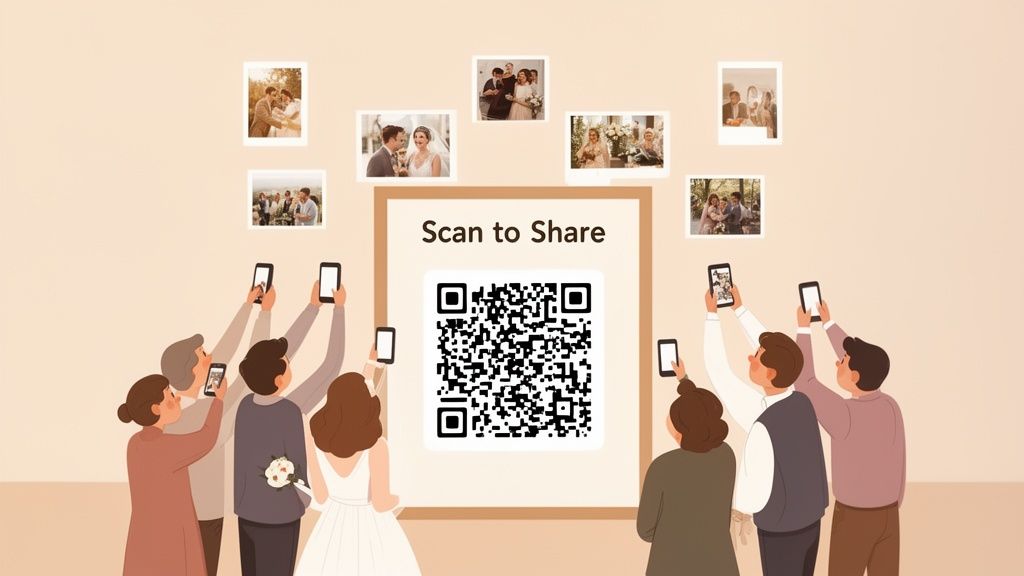
This is the secret to getting everyone involved, from your tech-savvy friends to older relatives who still aren't sure about smartphones. Guests just point their phone's camera at the code, a webpage pops up, and they can upload their photos instantly. The whole process takes seconds. It’s incredibly intuitive and requires no app.
Simple Strategies for Maximum Guest Participation
So, how do you get people to actually use it? The key is making it impossible to miss. By placing QR codes in strategic spots around your venue, you turn photo sharing from a chore into a fun, interactive part of the celebration.
Here are a few practical examples that work wonders:
- At the Venue Entrance: A QR code on a beautiful welcome sign or next to the guest book gets people uploading right as they arrive.
- On Reception Tables: Small, elegant cards with the code on each table are perfect. Guests can share photos during dinner or right after a great toast.
- Within the Program: Tucking the code into your wedding program or even on cocktail napkins means it’s always right there when inspiration strikes.
This seamless approach ensures no moment gets left behind. If you want to dive deeper, our complete wedding photo sharing QR code guide for 2024 has even more tips.
Beyond Weddings: Versatility for Any Event
While this is a game-changer for weddings, the simple genius of QR code photo sharing works for just about any get-together. The goal is always the same: to seamlessly consolidate photos from tons of people without any friction.
The real power of a QR code system is its ability to create a complete, 360-degree view of your event. It captures the moments you were a part of and, just as importantly, all the ones you missed while you were busy being the star of the show.
Think about other life events where this effortless, app-free method would be perfect:
- Birthday Parties: Finally, you can collect every shot of the surprise, the cake cutting, and the questionable dance moves.
- Corporate Gatherings: Consolidate photos from team-building events, conferences, or holiday parties into one secure gallery with instant uploads.
- Family Reunions: Create a digital album with pictures from every branch of the family tree, all uploaded in real time.
By integrating this simple tool, you’re not just collecting photos. You're building a richer, more authentic story of your celebration, told from every angle imaginable.
How to Avoid Common Timeline Mistakes
Even the most perfectly crafted timeline can hit a snag. Let’s be real, weddings are live events with a lot of moving parts. The goal isn’t to create a rigid, minute-by-minute schedule that causes panic if you’re five minutes behind. It's about building in enough breathing room to handle the little hiccups without derailing the whole day.
Knowing where things usually go wrong is half the battle. If you can anticipate the common pitfalls, you can keep the day flowing smoothly and the stress levels low.
One of the biggest culprits I see is underestimating travel time. If your ceremony and reception are in different spots, you absolutely have to add a buffer. I always tell my couples to add at least 15-20 minutes on top of what Google Maps says. You never know when you'll hit unexpected traffic, a road closure, or just need extra time to wrangle everyone onto the shuttle. That little cushion can be a lifesaver.
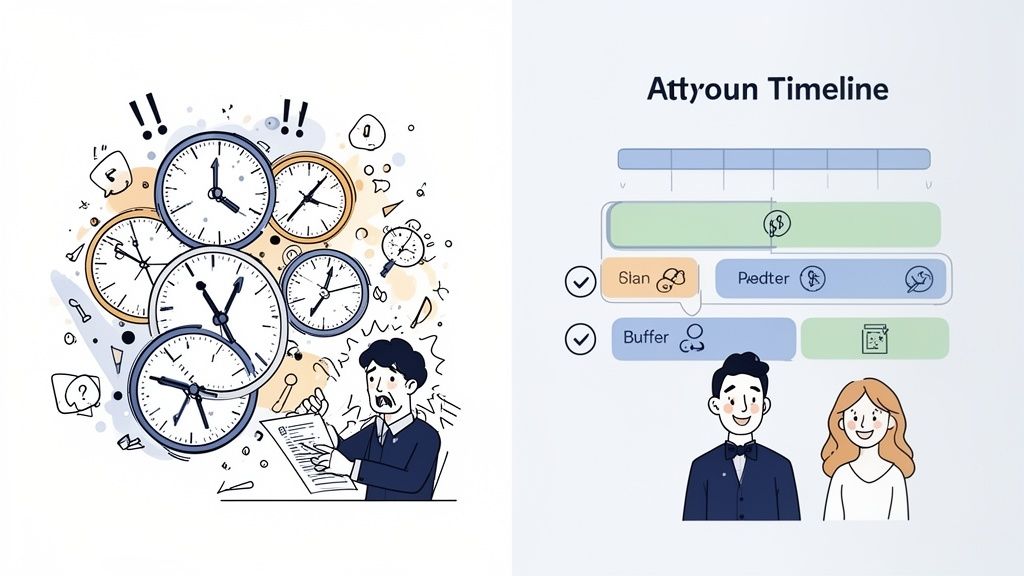
Another classic mistake? Forgetting to make a detailed family photo list. That post-ceremony portrait session can dissolve into chaos fast if you don't have a game plan.
Your photographer doesn't know who "Aunt Carol" is. A specific, written-out list of groupings (e.g., "Couple with Bride's Parents & Siblings") is your secret weapon for a fast, efficient, and tear-free photo session.
This kind of prep work is just as important as the logistics on the day itself. Streamlining how you collect and manage photos can prevent a lot of headaches, which is why it's worth reading up on the common wedding photo sharing problems and solutions that can pop up.
Forgetting the Communication Loop
A brilliant timeline is pretty useless if nobody knows what it is. One of the easiest ways to create delays is by failing to share the final schedule with your wedding party and key family members.
Make sure everyone who needs to be in pre-ceremony photos knows exactly where to be and when. A quick group text or an email a few days before the wedding can make all the difference.
Here are a few other common missteps I see all the time:
- No Buffer Time: Seriously, build little 10-15 minute cushions into your schedule. This is your safety net for when a groomsman can’t find his tie or hair and makeup runs a tad behind. It happens.
- Ignoring Sunset Times: Natural light is everything. Work with your photographer to schedule your most important portraits during the "golden hour"—that magical light just before sunset. It’s the most flattering, beautiful light of the day, and you don’t want to miss it.
- Not Scheduling "Alone Time": The day will fly by in a blur. I always encourage couples to block out 10-15 minutes just for the two of them. Step away, take a breath, and just soak it all in. It’s fantastic for your sanity and gives us a chance to capture some beautifully intimate, unposed photos.
Your Wedding Timeline Questions Answered
Building out your photo timeline is where the wedding day starts to feel real, but it’s also where a million little questions pop up. From how many hours you really need a photographer to making sure your grandma can share her photos, let’s clear up the common sticking points so you can finalize your plan.
How Many Hours of Photography Coverage Do We Need?
For most full wedding days, 8-10 hours is the magic number. This window is usually perfect for capturing everything from the last moments of getting ready all the way through the big reception events like your first dance and cake cutting. You get the full story without feeling rushed.
If you’re planning something a bit smaller, like an intimate micro-wedding, 4-6 hours might be all you need to cover the essentials. The best way to know for sure? Make a list of your absolute must-have moments and chat with your photographer. They'll help you pinpoint the perfect amount of coverage for your specific day.
What Is a First Look and Is It Worth It?
A "first look" is a private moment you and your partner share before the ceremony to see each other for the first time. It's become incredibly popular for a few big reasons. First, you get to share a genuinely intimate, emotional moment—just the two of you. Second, you can knock out most of your couple and wedding party photos before the ceremony even starts.
What does that mean for you? You actually get to go to your own cocktail hour!
Of course, the alternative is that classic, dramatic aisle reveal during the ceremony. There’s no right or wrong answer here; it’s all about the kind of experience you want to create.
How Do We Make Family Photos Fast and Efficient?
The secret to speedy family formals is all in the prep work. Before the wedding, sit down and create a specific shot list of every single family grouping you want (e.g., Couple with Bride's Parents & Siblings).
Share this list with your photographer ahead of time. Then, and this is key, designate one person—a "photo wrangler" who knows everyone—to help round up the right people at the right time. Sticking to 8-10 essential groups is the pro move for keeping this whole session under 30 minutes.
How Easy Is It for Guests to Use a QR Code for Photos?
Honestly? It's about as simple as it gets. We're talking completely foolproof.
There’s no app to download and no account to create. Guests just open their phone's camera and point it at the QR code you’ve displayed. A webpage pops open instantly.
From there, they can upload photos straight from their phone's library. If they can send a text message, they can do this. Its ease of use is why it works so well for guests of all ages and is perfect for more than just weddings—think birthdays, corporate gatherings, and family reunions.
Ready to finally stop worrying about missing a single candid moment? With WedPicsQR, you can set up a shared gallery in minutes. Just get your unique QR code, and let your guests start uploading their photos instantly—no app required.
Capture Your Wedding Memories with WedPicsQR
Create a unique photo-sharing page for your wedding and let your guests contribute to your visual story.
Create Your First Photo Page